
Recruitment Operations
12 min readHow Shared Pipelines Drive Better Collaboration Between Recruiters and Hiring Managers
Discover how shared pipelines improve hiring collaboration, boost recruiter productivity, and eliminate bottlenecks using an AI-powered recruiting platform.
By Dana Ostrowski · VP of RevOps, Ellevva ·
The Disconnect Between Recruiters and Hiring Managers
One of the most persistent bottlenecks in talent acquisition is the friction between recruiters and hiring managers. Both share the ultimate goal of filling open roles with the best possible candidates, yet they often operate in disconnected silos. Recruiters source, screen, and submit candidates, only to wait days or even weeks for feedback. Hiring managers, on the other hand, are focused on their day-to-day operational business responsibilities and often view the hiring process as an administrative burden, especially when they lack visibility into the candidate pipeline. This disconnect typically stems from fragmented tools and scattered communication channels. A recruiter might send candidate profiles via email, receive scattered feedback through instant messaging apps, and manually update a disconnected applicant tracking system. This disjointed approach leads to lost candidates, slow hiring closures, and immense frustration on both sides. More importantly, delayed feedback loops mean that high-quality candidates often accept offers elsewhere before a hiring manager even has the chance to review their resume. To solve this, organizations must fundamentally rethink their approach to hiring collaboration. By moving away from decentralized communication and embracing shared pipelines, companies can create a single source of truth where recruiters and hiring managers work side by side in real time.
What Are Shared Pipelines?
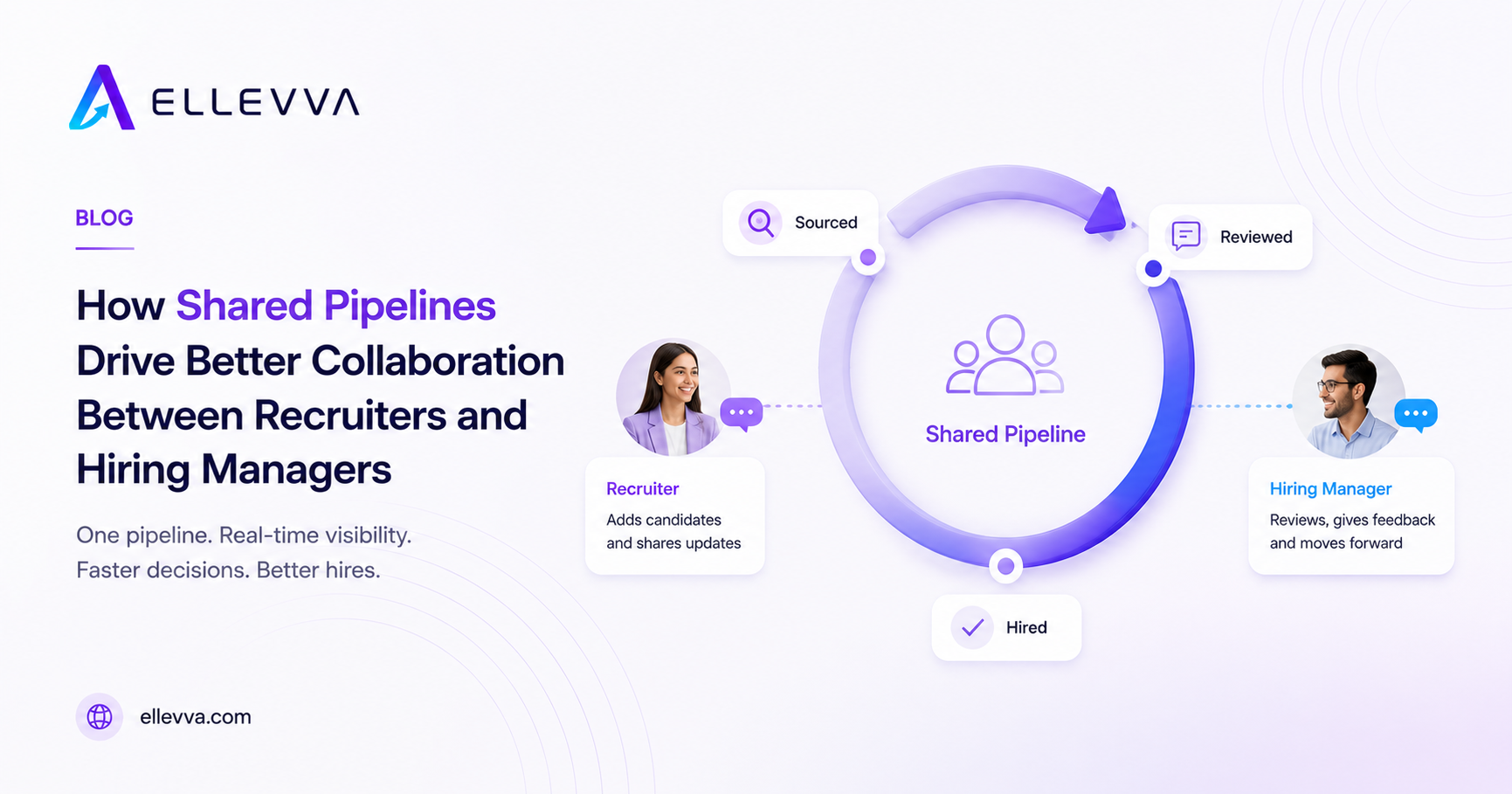
Shared pipelines represent a massive operational shift in recruitment. Instead of treating the candidate journey as a sequence of blind hand-offs ΓÇö where the recruiter completes their part and throws it over the wall to the hiring manager ΓÇö a shared pipeline acts as a unified command center. In a shared pipeline environment, every stakeholder has role-based access to the exact same visual dashboard. From the moment a requirement is posted to the final offer acceptance, the entire workflow is transparent. Hiring managers can log in and instantly see how many candidates are in the sourcing stage, how many have completed initial phone screens, and who is ready for final technical interviews. The benefits of shared pipelines extend far beyond simple transparency: instant, contextual feedback that eliminates messy email chains; alignment on candidate quality as hiring managers see the caliber of the talent pool in real time; reduced time-to-hire as bottlenecks are removed and communication is centralized; and an enhanced candidate experience because the internal team is aligned and updates arrive on time.

The Direct Impact on Recruiter Productivity
When communication relies on manual follow-ups, recruiter productivity plummets. Recruiters spend a significant portion of their week simply chasing hiring managers for interview feedback or approval to move forward with an offer. This administrative overhead leaves them with drastically less time to do what they do best: source, engage, and build relationships with top talent. Implementing shared pipelines transforms recruiter productivity. By automating the hand-off process, the system gently nudges hiring managers when their input is required. A modern centralized system automatically flags candidates who have been sitting in the "Manager Review" stage for too long, escalating the issue without the recruiter having to send a manual, nagging reminder. Furthermore, shared pipelines provide recruiters with data-backed leverage. If a hiring manager complains about a lack of candidates, the recruiter can pull up the shared dashboard to show that there are currently 15 qualified submissions awaiting the manager's review. This shifts the dynamic from an adversarial relationship to a collaborative partnership based on mutual accountability, shared data, and unified goals.
Elevating Collaboration with an AI Powered Recruiting Platform

The transition to shared pipelines is heavily accelerated by modern technology. While traditional ATS software simply acts as a digital filing cabinet, an ai powered recruiting platform acts as an active participant in the hiring process. By leveraging an ai recruiting platform, organizations can automate the matching of candidates against job requirements before the hiring manager even logs in. AI analyzes skills, experience, availability signals, and historical hiring data to score and rank candidates. When a hiring manager opens the shared pipeline, they aren't looking at an overwhelming list of unvetted resumes; they are presented with a highly curated shortlist of AI-matched talent. This level of intelligence fosters immediate trust between the recruiter and the hiring manager, who sees that the recruiter ΓÇö aided by the AI ΓÇö has thoroughly understood the requirements and provided highly relevant options from a global talent network. Additionally, an AI-driven system provides predictive insights: it can estimate the likelihood of a candidate accepting an offer based on market trends, highlight potential skill gaps that should be addressed during the interview, and even suggest custom interview questions tailored to the candidate's unique background.
The Unique Challenges of Staffing and Agency Workflows
While internal corporate recruitment teams face collaboration challenges, the complexity is multiplied for external agencies. For an agency, the "hiring manager" is actually a paying client. Bridging the communication gap with an external client requires a delicate balance of transparency, professionalism, and speed. Choosing the right software for staffing agency operations is a make-or-break decision for firm leaders. Legacy systems that are closed off to external clients force recruiters to rely on exported spreadsheets, PDF formatting, and messy email threads. To compete today, agencies must adopt modern staffing agency software that allows for secure, role-based client portals. When clients have access to agency staffing software via a shared external pipeline, they feel vastly more engaged in the process. They can review candidate profiles that have been carefully branded and formatted by the agency, leave comments, and schedule interviews seamlessly. Because the client experiences this frictionless workflow directly, the software staffing agency leaders deploy essentially becomes a massive competitive differentiator that helps win and retain enterprise business.
Niche Focus: Engineering and Technical Roles
Different types of recruitment require radically different workflow considerations. Take technical recruitment as an example. If you are operating a software engineer staffing agency, the evaluation process is highly complex. Hiring managers for these roles are often senior engineering leads or CTOs who require deep technical insights, code portfolio links, and specialized assessment scores before they will even consider utilizing their time for an interview. For a software engineering staffing agency, the shared pipeline must accommodate these technical nuances flawlessly. The platform must allow recruiters to easily attach GitHub repository links, technical test results, and AI-driven algorithmic skill assessments directly to the candidate's profile. When an engineering manager logs into the shared pipeline, all the context they need to make a highly technical judgment is right there, drastically reducing the back-and-forth communication that typically bogs down technical hiring.
High-Volume and Temporary Placements
On the other end of the recruitment spectrum, high-volume and contingent workforce placement demands absolute speed. A temporary staffing agency software solution must prioritize rapid deployment, fast compliance checks, and immediate availability tracking. In temporary staffing, a client might need 50 warehouse workers, nurses, or event staff by tomorrow morning. There is simply no time for leisurely resume reviews. Temp staffing agency software relies heavily on shared pipelines that operate in near real-time. Clients can instantly approve bulk submissions through the portal, and recruiters can immediately dispatch workers to the job site. To keep this rapid ecosystem running without human error, integrations are non-negotiable. Operational flow doesn't stop at candidate placement. The temporary staffing agency software must connect flawlessly with the firm's back-office financial systems ΓÇö once a candidate is marked as placed and active in the shared pipeline, that data should automatically flow into the staffing agency scheduling software to assign their shift blocks, and simultaneously sync seamlessly with the staffing agency accounting software to ensure payroll processing and client invoicing are handled without any manual data entry.
Key Metrics to Measure Hiring Collaboration
How do you know if your implementation of shared pipelines is actually improving hiring collaboration? You must look at the data. A comprehensive hiring command center will track time in stage ΓÇö specifically manager review ΓÇö as the ultimate test of internal collaboration; if candidates stall out for weeks once they reach the hiring manager, that is a collaboration bottleneck. The submission-to-interview ratio shows whether recruiters and managers are aligned on role requirements, and shared pipelines with AI matching should improve that ratio significantly. Offer acceptance rate climbs when collaboration is tight, since candidates move faster and feel more valued, reducing the chances they take a competing offer due to delays. And closure rate ΓÇö the total percentage of open requirements successfully filled ΓÇö rises directly as collaboration minimizes lost candidates, stops leaks in the funnel, and accelerates decisions.
Best Practices for Implementing Shared Pipelines
Technology alone will not force collaboration; it must be paired with operational discipline and cultural buy-in from all stakeholders. First, establish the rules of engagement early: before a role is even published, the recruiter and hiring manager should hold an intake meeting to agree on SLAs, such as reviewing all newly submitted candidates within 48 hours in exchange for a minimum of five qualified, AI-matched profiles within the first week. Second, standardize the feedback loop with structured scorecards that force hiring managers to rate specific attributes ΓÇö technical skills, cultural add, communication ΓÇö and require brief written justifications for rejections, which helps AI matching improve and helps recruiters refine their search. Third, keep everything in the platform: the moment communication bleeds back into email or Slack, the pipeline loses its value as the single source of truth, so leadership must enforce that if feedback isn't logged in the platform, it doesn't exist. Finally, provide executive visibility ΓÇö department heads and executives should have access to high-level analytics dashboards so leadership can see which managers are causing delays, creating a culture of transparent accountability.
Building a Better Hiring Engine
Hiring should not be a tug-of-war between talent acquisition and the rest of the business. By breaking down the walls of communication and uniting everyone under a single, transparent workflow, organizations can achieve a hiring velocity that outpaces their competition. Shared pipelines remove the mystery and frustration from the recruitment process. They give recruiters the digital tools they need to operate at peak efficiency, and they give hiring managers the visibility and control they crave without the administrative headache of constant manual updates. Whether you are an enterprise looking to streamline internal mobility and reduce your time-to-hire, or an external firm upgrading to modern agency staffing software to impress your clients, centralizing your hiring operations is the most impactful step you can take. Ready to eliminate bottlenecks and align your entire team around better hiring outcomes? Discover how Ellevva's AI-powered workflows (ellevva.com/solutions) can transform your talent acquisition strategy and connect you with the right candidates faster than ever before.