
Recruitment Strategy · Tech Hiring
Staffing Agency for Software Engineers: What to Ask Before You Sign
A practical guide for engineering managers evaluating a staffing agency for software engineers. It covers stack coverage, profile verification, AI fit scoring, interview updates and closure reporting, with a step-by-step way to test each claim.
By Ellevva ·
A staffing agency for software engineers is usually judged on its sales call, but the real differences surface in week three. That is when the shortlist turns out to contain near-identical resumes, interviews pass without feedback, and the closure report is a one-line email saying the offer was accepted.
Most of that is avoidable. The tech staffing agency questions below test the agency's process before you commit, covering stack coverage, profile verification, AI scoring, interview visibility and closure reporting.
Key takeaways
-
Ask the agency to demonstrate depth in your exact stack. A long list of technologies proves little until you see matching profiles.
-
Find out how each profile was verified, by whom and when.
-
If the agency uses AI scoring, ask which signals feed the score and whether a recruiter reviews the ranking.
-
Agree in writing on interview stages, update frequency and response times.
-
Define what a closure is, and what the closure report contains, before the first submission arrives.
-
Coverage: Ask for stack-level depth and the countries the agency actually hires in, not just a headline number.
-
Verification: Ask which checks happen before a profile reaches you, and how recent they are.
-
AI scoring: Ask which signals drive the ranking and how a human validates it.
-
Interview updates: Ask for a shared pipeline view with named stages and set response times.
-
Closure reporting: Ask for submission, interview and closure data for every requirement.
What should you ask a staffing agency for software engineers before signing?
Ask five questions: which technologies and countries the agency genuinely covers, how it verifies profiles, how its AI scoring ranks fit, how interview stages and updates reach you, and how closures are reported. Together they show whether the agency's process will survive real hiring pressure, not just a rehearsed demo.
Most agency comparison pages rank firms by size or brand recognition. That context is useful, but it says little about how your requirement will be handled day to day. The process decides whether your team waits two weeks or two months for a usable shortlist.
The questions apply equally to contract, permanent and mixed agencies, The questions apply equally to any recruitment agency for software engineers, whichever hiring model it uses..
Which technologies and countries does the agency actually cover?
Ask the agency to name the technologies and countries where it holds verified profiles, then test that claim against your exact stack. Coverage only counts when the agency can produce relevant candidates for your combination of language, framework, seniority and time zone within days, not weeks.
"We cover Java" is a very different statement from "we have verified senior engineers who run Spring Boot services on Kubernetes in your time zone." Request two or three anonymized profiles that match one of your open roles. If the agency cannot produce them quickly, its real coverage is probably thinner than its marketing suggests.
Two related questions are worth asking at this stage:
- What is the agency's own tech stack? In practice, it means the tools the agency runs on: an applicant tracking system (ATS, the software that stores candidate records and tracks their progress), sourcing tools, a matching engine and reporting dashboards. A fragmented stack usually produces fragmented updates.
- Where are candidates located? Remote engineering hiring raises questions about overlapping working hours, contracts and compliance. Ask which countries the agency supports and how it handles cross-border engagements.
For reference, Ellevva describes a network of 50,000+ global talent profiles covering 120+ technologies across 20+ countries, with verified profiles in North America, Europe, Asia, South America, Africa and Oceania (Ellevva, 2026). Ellevva covers 120+ technologies across 20+ countries, a scope you can test against your own stack (Ellevva, 2026).
To see how that coverage applies to your stack, post a requirement and check whether matching profiles appear for your language, framework, seniority and time zone. and see how quickly matching profiles appear for your own stack. The real test is whether profiles appear that match your requirement.

How are candidate profiles verified before they reach you?
Ask which checks the agency completes before a profile reaches your inbox, who runs them and how recently they were done. A verified profile should mean the agency has confirmed skills, experience and availability, not simply reformatted a resume pulled from a job board.
Verification is where agencies differ most and explain themselves least. Push for specifics:
- Identity and work history: Have employment dates and titles been confirmed?
- Technical skills: Was there a technical screen or coding exercise, or only a self-reported skills list?
- Availability and intent: When did someone last speak with the candidate about this role, its pay range and its location rules?
- Freshness: How old is the profile data? A skill listed two years ago may not reflect current practice.
Ask to see one verified profile with its verification notes attached. If the agency cannot show what was checked and when, the word "verified" is a label rather than a process. Also ask what happens when a profile goes stale, since engineers change jobs and stacks quickly.
How does AI scoring rank software engineers, and can you inspect it?
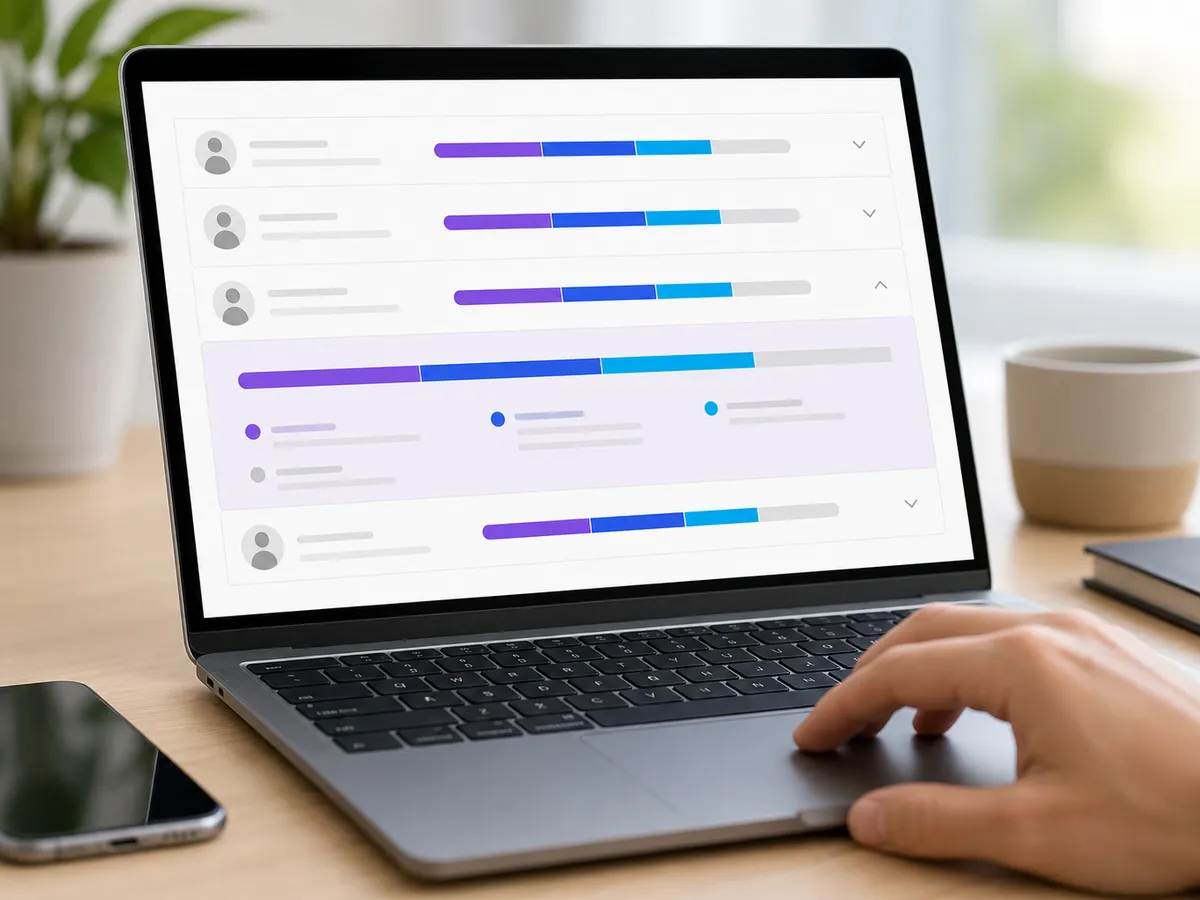
AI scoring is a model that ranks candidates against a requirement by comparing signals such as skills, experience and availability. Ask the agency which signals it uses, how they are weighted, and whether a recruiter reviews the ranking. A score you cannot explain is a score you cannot defend to your team.
A staffing agency with AI can shortlist faster and apply the same criteria to every profile, which reduces the inconsistency of manual screening. A staffing agency with AI can shortlist faster and apply the same criteria to every profile, which reduces the inconsistency of manual screening. In Ellevva's workflow, AI scores verified profiles and ranks them by fit once a requirement is posted (Ellevva, 2026). The value of any such system, however, depends on the quality of the underlying data and the transparency of the logic. The value of any such system, however, depends on the quality of the underlying data and the transparency of the logic.
Whether the agency buys ai staffing software or builds its own, these questions separate substance from marketing:
- Which fields feed the score: skills, years of experience, seniority, location, availability, compensation expectations?
- Can the agency explain, for a specific candidate, why they ranked above or below another?
- Does a recruiter validate the top matches before submission?
- How does the agency handle fairness, for instance by excluding signals that should not influence a ranking?
- How often is the underlying profile data refreshed?
The right framing is that AI supports a recruiter's judgment. It prioritizes the pool so that human time goes to conversations that matter, but it does not replace the human who confirms motivation and communication quality.
How are interview stages and updates shared with you?
Ask for a shared pipeline view with named stages, such as submitted, screening, technical interview, final round and offer, and agree on how quickly each status is updated. Without that visibility, engineering managers end up chasing recruiters by email, and strong candidates lose interest while they wait.
Slow or silent interview loops are a common source of candidate drop-off. Candidates who hear nothing for several days often accept another offer, and you only discover this when the agency reports back. The fix is operational rather than technical: agree on who updates what, and by when.
Before signing, settle these points:
- Stage definitions: What does each status mean, and who moves a candidate between stages?
- Update cadence: Is the pipeline updated in real time, daily or weekly?
- Feedback loop: How quickly does your interview feedback reach the candidate, and how is it recorded?
- Single source of truth: Do you see the same data the recruiter sees, or a summarized version?
Ellevva describes this stage as an interview pipeline where teams track interviews, updates and decisions, and its requirement-to-closure workflow is built to keep recruiters, hiring managers and HR looking at the same pipeline. Use the same standard when you evaluate any agency: if you cannot see the pipeline, you cannot manage it.
How should closures be reported?
Ask the agency to define a closure and to show a sample closure report before you sign. A useful report states how each requirement ended, how many profiles were submitted and interviewed, where candidates dropped out, and how long each stage took.
Closure is not a universal term. For one agency it means the offer was accepted, for another it means the engineer started work, and for a third it includes a replacement guarantee period. Settle the definition in the contract, because it affects fees, reporting and your own headcount planning.
"Close the loop with transparent reporting." (Ellevva, 2026)
Share on LinkedIn · Share on X
That principle applies to any provider. Ask for submission, interview and closure counts for each requirement, plus the reasons for rejections. Those figures let you see whether the problem lies in the sourcing, the screening or your own interview process, which is far more useful than a note saying the role is filled.
How do you hire software engineers through an agency without losing control?
To hire software engineers through an agency without losing control, write the agency's answers to the five questions into the contract, To hire software engineers through an agency without losing control, write the agency's answers to the five questions into the contract, then hold the agency to those answers in every regular report. The contract should state which technologies and countries are covered, what verification means, which signals feed the AI score, how interview stages are updated and how a closure is defined.
When those answers are in writing, the agency's routine reporting shows whether they are being kept. Each report should use the stage names you agreed, apply the closure definition you agreed and show submission, interview and closure counts for every requirement. If a report departs from the agreement, you can point to a specific term instead of a vague sense that things are slow.
What this means for you
For engineering managers, the practical shift is to evaluate an agency's operating process with the same rigor you apply to a technical vendor. Put your answers to these five areas in the statement of work and name one owner on each side.
For recruitment leaders and operations teams, the same questions work in reverse. They describe what hiring managers increasingly expect from any staffing agency for software engineers: verifiable profiles, explainable matching, visible pipelines and clear reporting. Agencies that can answer them well tend to earn repeat requirements.
A few habits make the evaluation easier:
- Ask for evidence (a profile, a screenshot, a sample report) instead of descriptions.
- Record the agreed definitions of verification, stages and closure in writing.
- Compare each regular report against those agreed definitions.. Ask for sample profiles, a scoring explanation, a pipeline view and a closure report, and compare what you receive against what the sales team promised.
Here is an illustrative scenario, not a client result. An engineering manager needs two senior backend engineers within a quarter. Instead of signing a broad agreement, the manager runs this sequence over about a week:
- Send the agency one live requirement with the stack, seniority, time zone and compensation range.
- Request two or three anonymized profiles with verification notes attached.
- Ask the agency to explain, in plain language, why each profile was ranked where it was.
- Ask to see how interview stages would appear in a shared pipeline view.
- Request a sample closure report and compare its definition of closure to your own.
The agency that handles these steps cleanly has shown how it will behave under pressure. The agency that responds with generalities has told you something equally useful.
What this means for you
For engineering managers, the practical shift is to evaluate an agency's operating process with the same rigor you apply to a technical vendor. Put your answers to these five areas in the statement of work, name one owner on each side, and set a review point after the first few submissions.
For recruitment leaders and operations teams, the same questions work in reverse. They describe what hiring managers increasingly expect from any staffing agency for software engineers: verifiable profiles, explainable matching, visible pipelines and clear reporting. Agencies that can answer them well tend to earn repeat requirements.
A few habits make the evaluation easier:
- Bring a real requirement to the first meeting rather than a generic job description.
- Ask for evidence (a profile, a screenshot, a sample report) instead of descriptions.
- Record the agreed definitions of verification, stages and closure in writing.
- Review the first batch of submissions and the first report before expanding scope.
Next step
A good agency welcomes these questions, because clear answers shorten the path to a good hire. If you want to see how stack coverage, verified profiles, AI scoring, interview tracking and closure reporting fit together on a live role, you can post a requirement at ellevva.com/contact and judge the process on your own stack.
Frequently asked questions
What is the difference between a temp agency and a recruitment agency for software engineers?
A temp or contract agency typically places engineers for a fixed term and manages the engagement, while a recruitment agency usually finds permanent hires for a placement fee. Many firms do both, so ask which model applies to your requirement and how payroll, notice periods and replacements are handled.
How many technologies should a staffing agency for software developers cover?
The headline number matters less than depth in your own stack. An agency listing 120 or more technologies is only useful if it can show verified profiles that match your language, framework, seniority and time zone within a few days.
Can AI staffing software replace the recruiter?
No. AI scoring can rank candidates faster and more consistently, but a recruiter still needs to confirm intent, compensation fit and communication quality. The strongest setups use AI to prioritize and recruiters to validate.
What should a closure report from a tech staffing agency include?
It should show, for each requirement, how many profiles were submitted, how many reached interview, where candidates dropped out and how the requirement closed. It should also state the closure date and the definition used, such as offer accepted or candidate started.
Related resources
Tags: staffing agency for software engineers, hire software engineers through an agency, tech staffing agency questions, staffing agency with ai, ai staffing software, recruitment agency for software engineers